Have you ever wondered why God is referred to by so many different titles throughout Scripture? In ancient biblical culture, a name was far more than a simple label used to grab someone’s attention; it was a profound revelation of a person’s intrinsic nature, identity, and destiny. When we slow down to examine the names of God and what they mean, we aren’t just engaging in an academic or philosophical exercise. Instead, we are unlocking a beautiful, multi-dimensional portrait of our Creator. Every single name God uses to reveal Himself in the Bible serves as an invitation to understand His character more intimately and to trust Him more deeply in our daily walks of faith.
For believers today, learning the names of God and what they mean transforms our prayer lives and anchors our souls. When you are broken, knowing God as a healer changes how you pray. When you are anxious, knowing Him as your peace provides immediate comfort. Below, we explore the primary Hebrew names of God, their biblical origins, and how their powerful meanings apply to your life today.
The Primary Names of God in the Bible
The Old Testament was originally written primarily in Hebrew, a language rich with imagery and deep spiritual substance. Here are the foundational foundational names that form the bedrock of biblical theology.
1. Elohim (The Mighty Creator)
- First Appearance: Genesis 1:1 – “In the beginning, Elohim created the heavens and the earth.”
- The Meaning: Strong, Creator, Supreme Ruler, and Judge.
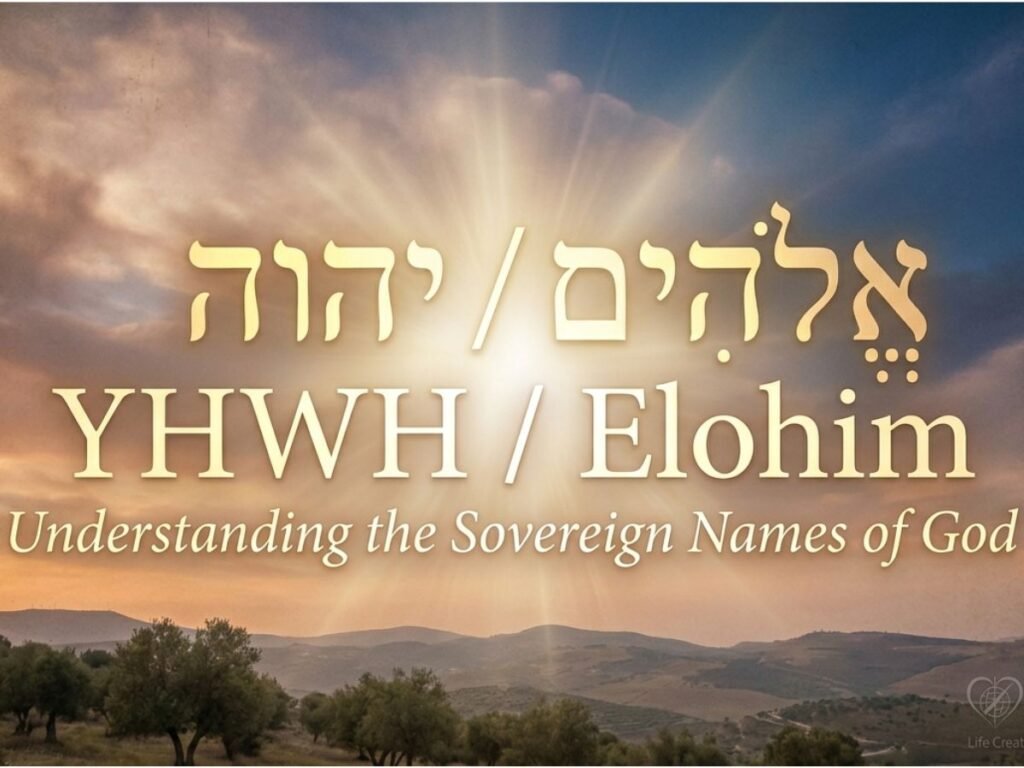
- The Context: Occurring over 2,500 times in the Old Testament, Elohim is technically a plural noun. While false religions used it to describe multiple “gods,” the biblical writers used it with singular verbs when referring to the one true God. Church fathers and scholars note that this grammatical mystery subtly hints at the Holy Trinity—the plural majesty of the Father, Son, and Holy Spirit working as One. It signifies His absolute sovereignty over every molecule in the universe.
- Life Application: When life feels chaotic or empty, remember Elohim. The same God who spoke light into darkness has the creative power to bring order, beauty, and purpose out of the chaos in your life.
2. YHWH / Yahweh (The Self-Existent, Covenant-Keeping Lord)
- First Appearance: Exodus 3:14 – “God said to Moses, ‘I AM WHO I AM.’ And he said, ‘Say this to the people of Israel: I AM has sent me to you.'”
- The Meaning: The Self-Existent One, Eternal, Unchanging, “I AM.”
- The Context: Known as the Tetragrammaton (the four-letter word), YHWH is the most sacred, personal name of God, appearing over 6,800 times. Ancient Hebrew did not record vowels, leading to various transliterations like Yahweh or Jehovah. It denotes a God who is not dependent on anyone or anything else for His existence. He is completely self-sufficient, faithful, and bound by covenant to His people.
- Life Application: Because Yahweh is the ultimate “I AM,” He is whatever you need Him to be today. He is your strength when you are weak and your guide when you are lost. He never changes, and He never breaks His promises.
3. Adonai (The Lord, Master, and Owner)
- First Appearance: Genesis 15:2 – “But Abram said, ‘O Lord [Adonai] God, what will you give me, for I continue childless…'”
- The Meaning: Master, Lord, Owner, or Ruler.
- The Context: Adonai shifts the focus from God’s creative power to His rightful authority over our lives. It implies a relationship where God is the master and we are His servants. In ancient times, a servant found their identity, protection, and provision entirely in their master.
- Life Application: Surrendering to God as Adonai means acknowledging that you belong to Him. When you accept His lordship, you also step under His total protection and provision. You no longer have to carry the heavy burden of directing your own steps.
The Compound Names of God (Jehovah/Yahweh Titles)
As God revealed Himself through historical events and human crises, He attached specific attributes to His personal name, YHWH. Understanding these compound names of God and what they mean gives us practical anchors during specific seasons of trial.
4. Jehovah Jireh (The Lord Will Provide)
- Scripture: Genesis 22:14 – 14 And Abraham called the name of that place Jehovahjireh: as it is said to this day, In the mount of the Lord it shall be seen.
- The Story: Abraham was tested by God to offer his son Isaac on Mount Moriah. At the final moment, God provided a ram caught in a thicket. Abraham named the place Jehovah Jireh.
- The Meaning: “The Lord will see to it” or “The Lord will provide.”
- Life Application: Before you even realize you have a need, God has already set the provision in motion. Whether it is financial support, emotional endurance, or spiritual breakthrough, trust Him to see to your needs in His perfect timing.
5. Jehovah Rapha (The Lord Who Heals)
- Scripture: Exodus 15:26 – 26 He said, “If you listen carefully to the Lord your God and do what is right in his eyes, if you pay attention to his commands and keep all his decrees, I will not bring on you any of the diseases I brought on the Egyptians, for I am the Lord, who heals you.”
- The Story: After wandering in the desert without water, the Israelites found a bitter spring at Marah. God commanded Moses to throw a log into the water, and it became sweet. God then revealed Himself as their healer.
- The Meaning: “The Lord who heals, restores, or makes whole.”
- Life Application: Jehovah Rapha does not just heal physical illnesses; He mends broken hearts, restores fractured relationships, and heals wounded spirits. Bring your pain to Him, for restoration is His very nature.
6. Jehovah Nissi (The Lord Is My Banner)
- Scripture: Exodus 17:15 – 15 Moses built an altar and called it The Lord is my Banner.
- The Story: Moses built an altar after the Israelites miraculously defeated the Amalekites while Moses held up his staff with the help of Aaron and Hur.
- The Meaning: “The Lord is my banner, flag, or victory.”
- Life Application: In ancient warfare, a banner was a rallying point for soldiers to find courage and direction. When you feel overwhelmed by spiritual warfare, anxiety, or life’s battles, raise Jehovah Nissi as your victory. The battle belongs to Him.
7. Jehovah Shalom (The Lord Is Peace)
- Scripture: Judges 6:24 – 24 So Gideon built an altar to the Lord there and called it The Lord Is Peace. To this day it stands in Ophrah of the Abiezrites.
- The Story: Gideon was terrified after seeing the Angel of the Lord face-to-face during a time of national oppression. God reassured him, saying, “Peace be to you.” Gideon then built an altar and named it Jehovah Shalom.
- The Meaning: “The Lord is our entire wholeness, safety, and peace.”
- Life Application: True peace is not the absence of trouble; it is the presence of Jehovah Shalom in the midst of the storm. Turn to Him when anxiety threatens to rob your joy.
8. Jehovah Raah (The Lord My Shepherd)
- Scripture: Psalm 23:1 – 1 The Lord is my shepherd, I lack nothing.
- The Story: King David, who spent his youth tending sheep, penned the immortal words: “The Lord is my shepherd; I shall not want.”
- The Meaning: “The Lord my companion, friend, and shepherd.”
- Life Application: A shepherd guides, feeds, corrects, and defends the flock. Jehovah Raah knows you intimately by name. You can rest easy knowing that He is actively guiding your path and keeping you safe from spiritual predators.
9. Jehovah Shammah (The Lord Is There)
- Scripture: Ezekiel 48:35 – It was round about eighteen thousand measures: and the name of the city from that day shall be, The Lord is there.
- The Meaning: “The Lord is present.”
- The Context: This name was given to the restored, future city of Jerusalem, signifying that God’s glory and abiding presence would never leave His people again.
- Life Application: You are never truly alone. Even in your darkest valley or loneliest night, Jehovah Shammah is right beside you. His presence is an unshakeable reality.
Summary Table: Quick Reference to God’s Names
| Hebrew Name | English Meaning | Key Scripture Reference | Character Trait Revealed |
| Elohim | The Mighty Creator | Genesis 1:1 | Sovereign Power & Majesty |
| Yahweh / YHWH | The Self-Existent One | Exodus 3:14 | Covenant Faithfulness |
| Adonai | Lord, Master | Genesis 15:2 | Absolute Authority & Ownership |
| Jehovah Jireh | The Lord Will Provide | Genesis 22:14 | Eternal Provider |
| Jehovah Rapha | The Lord Who Heals | Exodus 15:26 | Healer of Body, Soul, & Spirit |
| Jehovah Nissi | The Lord Is My Banner | Exodus 17:15 | Our Victory in Battles |
| Jehovah Shalom | The Lord Is Peace | Judges 6:24 | Source of True Rest and Calm |
| Jehovah Raah | The Lord My Shepherd | Psalm 23:1 | Loving Guide and Protector |
| Jehovah Shammah | The Lord Is There | Ezekiel 48:35 | Ever-Present Companion |
The Ultimate Revelation of God’s Name: Jesus Christ
While the Old Testament unpacks the diverse names of God and what they mean through various titles, the New Testament brings them all together into one glorious person: Jesus Christ.
In Matthew 1:23, Jesus is given the name Immanuel, which means “God with us.” Jesus is Elohim in human flesh, creating a new life within us. He is Jehovah Jireh, providing the ultimate sacrifice for our sins on the cross. He is Jehovah Rapha, healing our separation from the Father. When Jesus declared, “Before Abraham was, I AM” (John 8:58), He explicitly aligned Himself with the covenant name Yahweh.
At Life Creation Mission International (LCMI), we believe that every human being is uniquely created in the image of God (Elohim). Therefore, understanding His names helps us realize our true identity and value. When you call upon His name, you are not shouting into an empty void; you are calling upon a living, loving God who has revealed exactly who He is so that you can run to Him in times of need.
How to Apply This to Your Life Today:
- Pray the Names of God: When you pray, use these specific names. If you need peace, pray: “Jehovah Shalom, I invite your peace into my heart right now.”
- Meditate on His Character: Choose one name each week. Study the corresponding scripture and let that aspect of God’s character transform your mindset.
- Share the Truth: Help someone who is struggling by pointing them to the specific attribute of God they need most right now.
Which name of God resonates with you the most in your current season of life? Let us know in the comments below, or reach out to our prayer team at LCMI today. We would love to stand in faith with you